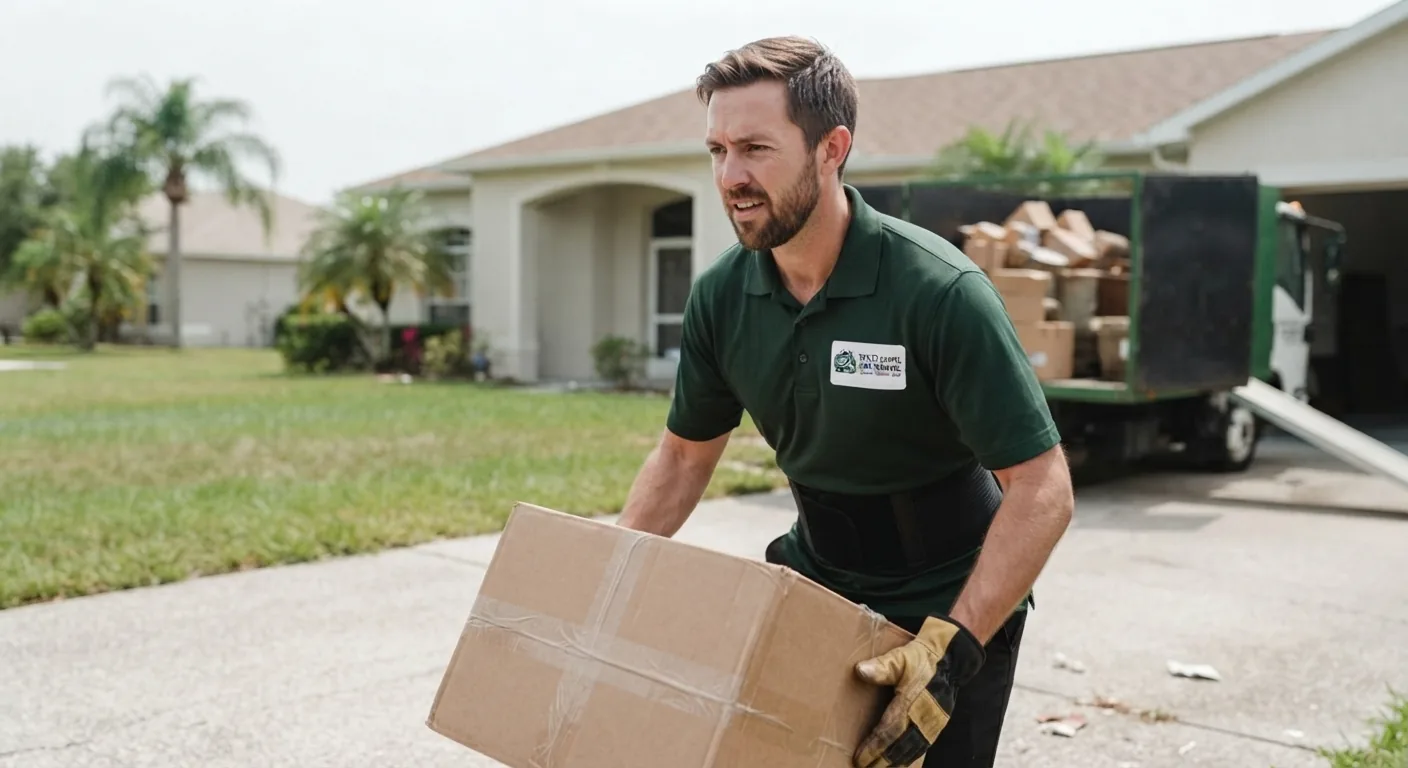
Call any licensed junk removal company in Tampa and hand them a full garage, and nearly everything in it is fair game — furniture, boxes, broken tools, old electronics, scrap wood. But there is a short, consistent list of items no hauler can legally load onto a truck, no matter how badly you want them gone. It has nothing to do with a crew being unwilling to touch something and everything to do with where that truck's load ends up at the end of the day.
Every load a junk removal company hauls eventually gets weighed in and sorted at a transfer station or landfill, and those facilities operate under strict acceptance rules of their own. Liquids, pressurized containers, and anything classified as hazardous waste are turned away at the gate — a truck that shows up with a load contaminated by leaking chemicals or a punctured battery can get an entire load rejected, not just the offending item. That is the real reason haulers everywhere, not just in Florida, keep a firm line around a handful of categories: it is baked into how disposal facilities are permitted to operate, and no hauling company gets to opt out of it.
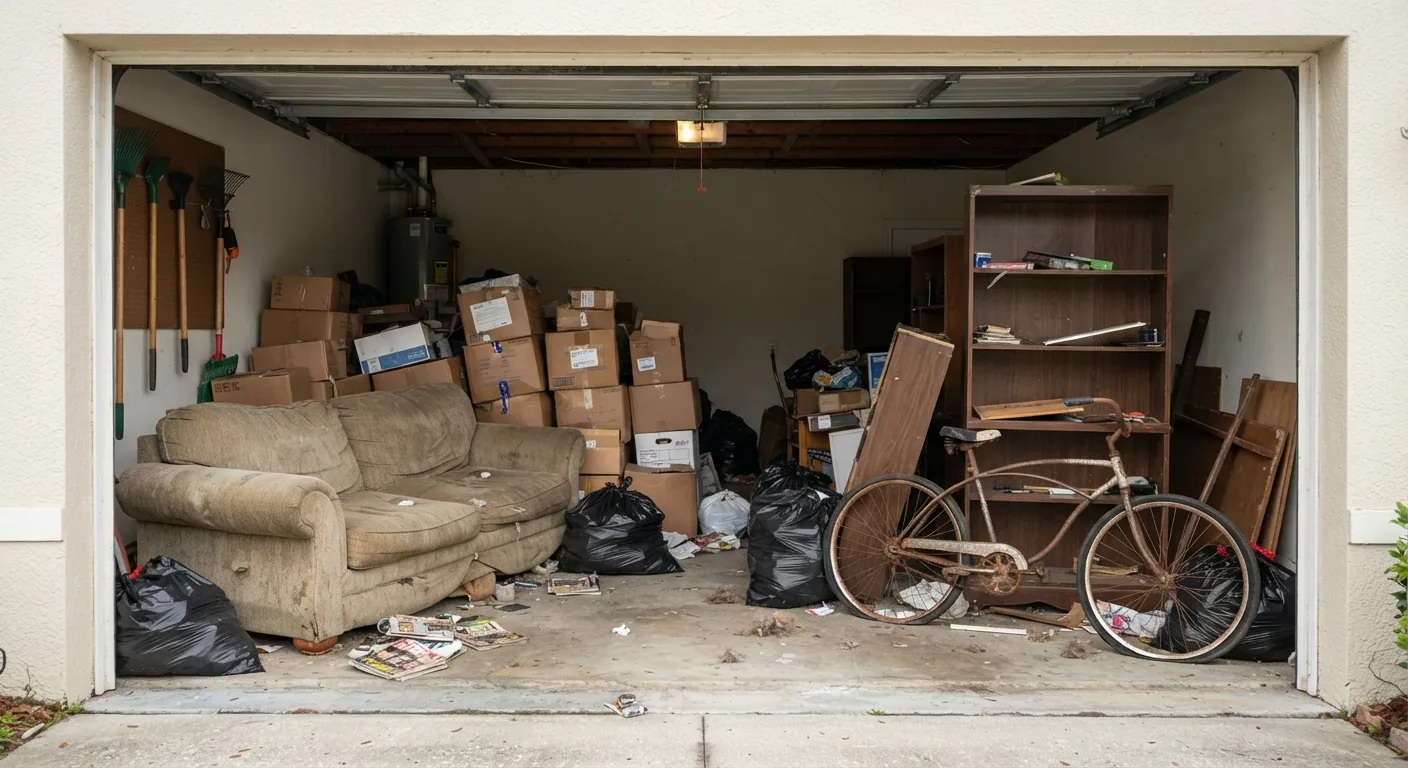
This list looks about the same whether you call a company in South Tampa or Plant City, because it is driven by disposal-facility rules rather than anything company-specific:
Notice what is not on that list: appliances, mattresses, electronics, tires, and yard debris are all things we handle every day — they just get routed to the correct recycling or disposal channel on our end instead of a landfill. The restricted list above is narrower and more specific than most people expect.
None of this means you are stuck with a garage shelf of half-used chemicals forever — it just means a different stop than the regular junk truck.
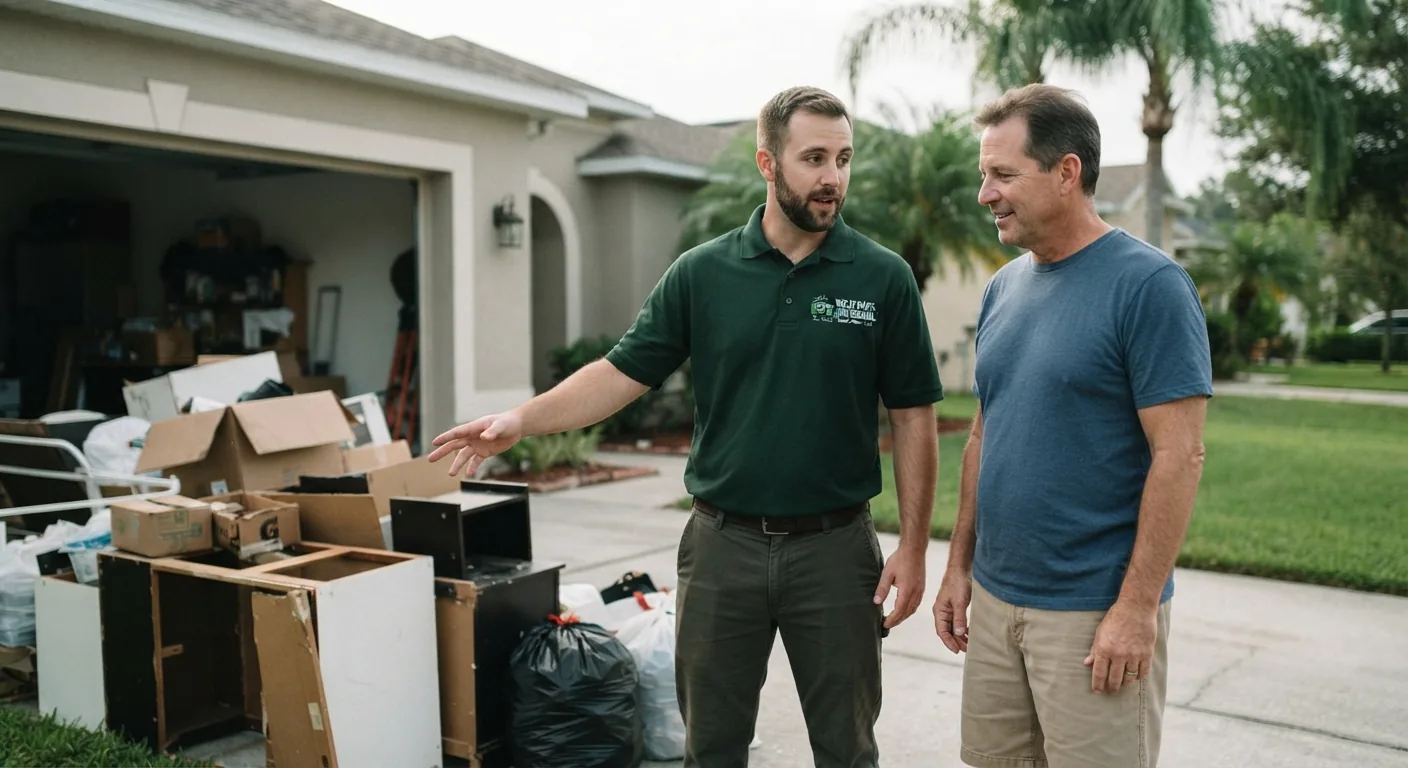
In practice, this rarely derails a job. A garage cleanout in Carrollwood or an estate cleanout in Westshore almost always turns up a can of old paint or a couple of dead batteries somewhere along the way, and it does not stop the crew from clearing everything else. During the walkthrough, our team flags anything on the restricted list, hauls every allowed item that same visit, and points you toward the right drop-off for the rest. If a job is heavier on this kind of material — an old workshop, a garage that doubled as storage for chemicals, a property with visible asbestos siding — it is worth mentioning when you book so we can plan the visit around it rather than discover it on-site.
If it pours, sprays, ignites, explodes, or is regulated as medical waste, assume it needs a different stop than the junk truck. Everything else — furniture, appliances, boxes, yard debris, construction scraps, old electronics — is exactly the kind of load we handle across Tampa and Hillsborough County every day. Not sure which category something falls into? Text a photo before we show up and we will tell you straight rather than let a truck get turned away at the gate. For more on how a typical pickup runs once everything is sorted, see how to prepare for your junk removal appointment and what happens to your junk after pickup.
If a hazardous item turns up during a larger project, our garage cleanout and estate cleanout crews are used to working around it without slowing down the rest of the job. And if you are weighing whether a rented dumpster would make more sense for a project with a lot of restricted material, our breakdown of junk removal vs. dumpster rental in Tampa covers where each option falls short. For Hillsborough County residents wondering whether any of this crosses into permit territory, see do you need a permit for junk removal in Hillsborough County.
Only if it is dried out solid — pop the lid, and if nothing sloshes or the can is bone dry, it can usually go on the truck with everything else. Wet or liquid paint, even a half-inch left in the bottom of a can, counts as hazardous waste and has to go to a household hazardous waste drop-off instead. If you want it gone faster, leave the lid off outside for a few days so it dries out before we arrive.
Most Tampa-area propane exchange retailers and hardware stores will take an empty or near-empty tank off your hands, sometimes for a small credit toward a new one. A tank with gas still in it needs to go back to a retailer that handles propane specifically — no hauling company, including ours, can legally load a pressurized tank onto a truck.
Not on the truck, but it is one of the easiest items on this list to get rid of. Auto parts stores and most auto service shops across Hillsborough County accept old batteries year-round, often for a small deposit refund, since the lead and acid inside are recycled through a completely separate stream from household junk.
We cannot touch it, and neither can any general junk removal crew — handling suspected asbestos-containing material requires a licensed abatement contractor with the right containment and air-monitoring equipment. If you are not sure whether an older Tampa home's siding, flooring, or ceiling texture contains asbestos, that is worth confirming with an abatement contractor before any demolition or removal starts.
No — fireworks and ammunition are handled by local law enforcement non-emergency lines or a licensed disposal service, never by a general hauling crew. Gasoline and other flammable liquids fall under the same household hazardous waste rules as paint and chemicals, so they need to go to a designated drop-off rather than into a truck full of everything else from the garage.
Absolutely — this comes up constantly on garage and estate cleanouts. We haul everything that is allowed and simply flag the handful of items that need to go elsewhere, so the bulk of the job still gets done in one visit instead of the whole thing stalling over one paint can or a battery.
A short walkthrough of what to do (and skip) before the truck shows up, so your appointment window turns into a fast, flat-priced pickup.
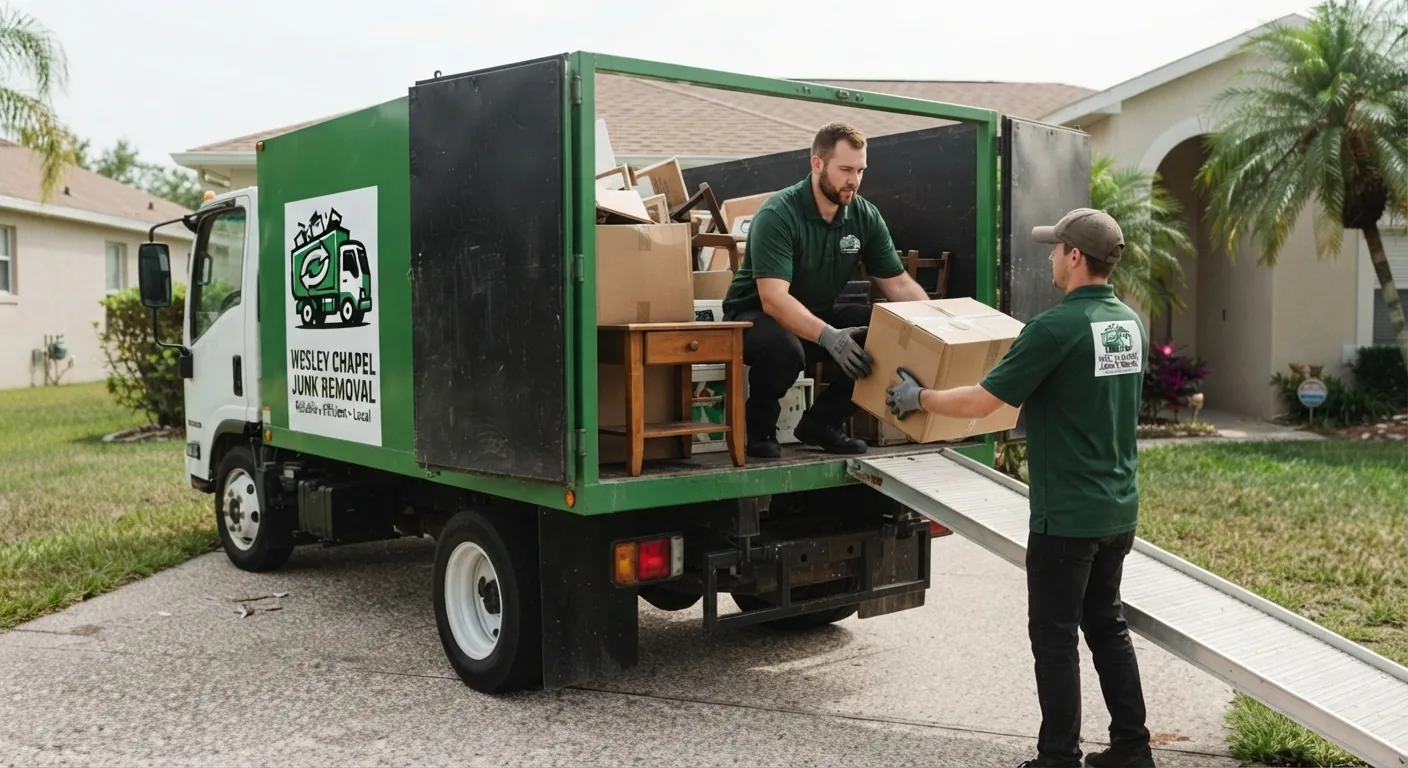
Where your old furniture, appliances, and boxes actually go after the truck pulls away — donation, recycling, and landfill, in that order.
When a permit actually applies — sheds, structures, and curbside dumpsters — versus the everyday hauling jobs that never need one.
Text us a photo and we'll tell you straight what rides on the truck and what needs a different stop — then give you a flat price for the rest.